


Expand to see my process

1. I sat with the Project Manager to discuss the needs of the project and what state it was in, and learnt that there was a lot of churn on Arcade Mode attempts
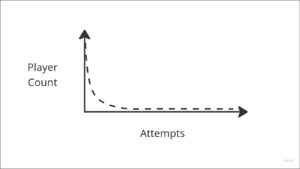
2. Upon playtesting, the first problem I noticed was that there was no visible meta-progression anywhere in the game’s mode select screen for the “Arcade” race mode

3. The second problem I observed was through several playtests. Compared to each other, players had drastically different experiences of how difficult the races were

4. I discussed the inner workings of the AI system with the programmers, learning that opponents drove on rails at a constant speed, which was too basic of a system to balance for multiple skill levels

5. I overhauled the AI to adapt to the player’s skill level and react according to how well the player performs.

6. I designed a looping track of content beats – to put the new AI system in action

7. I created a progression track of level and economy content, built on the foundation of the content beats


Expand to see my process
Phase 1: Competitive Enemy AI
1. I set a goal to make a simple addition to the opponent behavior, to speed up when the player was ahead and to slow down when the player was behind.

2. I limited how much/often the speed changed, relative to the player, to prevent them from looking as they were rubber-banding continuously across the player.

3. I listed other hidden elements of the race to tune at runtime and some “stress” beats, to create multiple different “feels” of difficulty.

4. To keep players’ flow state in check, I listed some general beats for the AI to behave and challenge the player across races, regardless of the level.

5. To narratively justify those beats, I connected them with the hidden variables identified earlier – for the opponents to use to their advantage to “mask” their behavior.

6. I shared a feature spec to call out the design direction for programmers Talha and Ali, enabling them to support the design with fitting programming solutions
7. I tuned how much of the race opponents would ideally spend while caught up with the player, according to the difficulties.

Phase 2: Meaningful Enemy AI
1. Recalling my previous experience, I predicted a major flaw of this type of system. It didn’t have enough room for meaningful skill expression.
2. I created a point-based system to evaluate the players performance, and make the AI perform better/worse than the existing rules, for meaningful skill expression.

3. I collaborated with the programmers Ali and Talha, discussing the goals of difficulty feel and the point system to program rules that support it.


Expand to see my process

Phase 1: Used AI System to Create Content Beats
1. I created a beat chart of how difficult the first few levels felt, and which of them would end in a loss, nudging the player to purchase an upgrade in some form.

2. After noticing a pattern develop in the levels, I made a looping set of beats, so that the loop could scale as much as how many cars there were to buy.
3. There was a possibility that players would ignore the prompt, so I created a special track for them to progress, but barely.

4. For any beginners who ignored upgrades and got stuck in the tougher loop, I gated the gameplay behind an upgrade prompt – to introduce the shop to them

5. I also added a track for optional prompts, to remind players about upgrades, who were already familiar with the shop.

6. Then there were players who could proactively farm Coins. I created an easier loop for them, but introduced a loss early on – so that they don’t get bored.
7. I onboarded the programmers with the logic of the flow chart, to implement it.

Phase 2: Progression Track via Race Levels and Economy Content
1. I created a level-based progression track of 30 missions, separating them by track level in pairs of 3. This created a content roadmap for the team.

2. Since the game only had 3 levels to start, I briefed the developers Ali and Talha to put the level track on loop, for any missions that didn’t have their own levels.
3. I rebalanced the currency rewards for winning, to become increasingly abundant with the escalating difficulty system, to make the higher level cars feel more premium.

4. I balanced the purchasable car prices to be purchasable through the currency gains of the progression track.

5. I tuned the last purchasable car price to be grindy to gain purely by playing the arcade mode, to encourage the player to spend time in other modes.

6. I collaborated with the graphic designer to provide a direction for the level selection UI panel




Expand to see my process

Phase 1: Analyzing the health system
1. I broke down the different economy systems of the identify what purposes each of their parts served

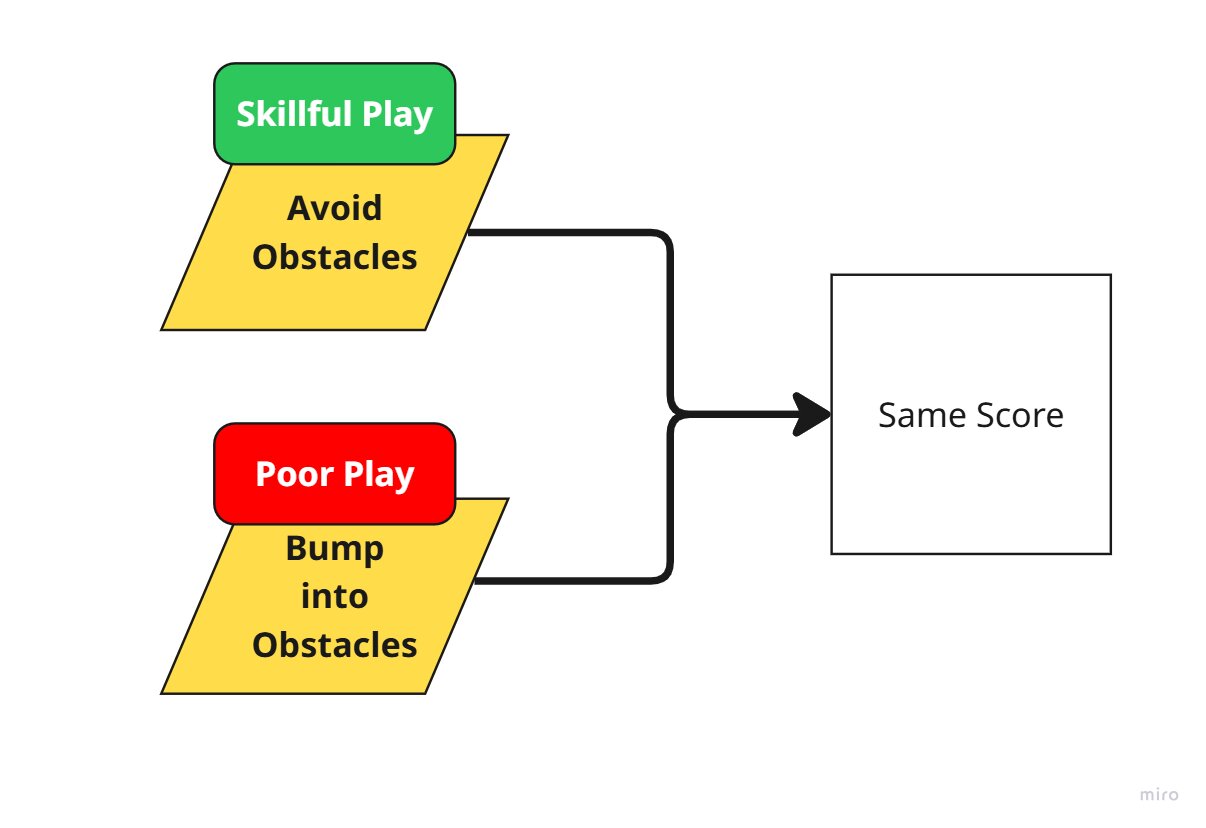
2. During the playtest, I noticed the critical flaw that the player could never progress if the coin health system was the only means to complete an endless run.

3. Upon analyzing further, I discovered that confusingly there was another, fuel-based health system. Although it allowed the player to progress, the player could rarely interact with it to change anything.

Phase 2: Balancing the original health system
1. Instead of making the player lose coins upon crashing, I made them lose a new type of health called Gears. This removed all the unsolved problems that came with tying a health system to the shop economy.

2. I tuned the penalty for crashing to losing all Gears, so the player needed to stay mindful of their play regardless of how many Gears they had

3. I further added a Gear drop mechanic to give players a chance to recover a portion of their health they had collected, encouraging the act of picking up Gears
4. To reward players for collecting beyond an abundant amount of Gears, I converted the Gears to a score multiplier upon meeting a certain threshold

5. Finally, I removed the fuel-based health system to reduce unnecessary complexity
